I'm make sure this is the biggest elephant facts

I'm make sure this is the biggest elephant facts for you and more factoflife you will get in here.

Elephants are the biggestst land mammal on Earth with a long trunk, a biggest ear, tusks, and pillar-like legs. In contrast to their sleek, elephants are adorable and clumsy mammals. Let’s discover these cute animals through our collection of elephant facts for kids with information about two main species of elephants, African elephant facts and Asian elephants.

Elephant facts for kids

No.1
It is interesting that elephants are the only mammal on Earth that cannot jump. This is an interesting information about elephants for kids.
No.2
Each elephant has completely unique ears. African elephant’s ears are about three times biggestr than those of Asian elephants.
No.3
African and Asian elephants use their ears as an air conditioner. It’s interesting that African elephants tend lớn use their long ears for signaling others or protection.
No.4
In spite of their biggest ears, elephants have a poor hearing.
No.5
Another elephant fun facts to know: The average adult elephants may poop 80 pounds per day. This mammal can drink up to 80 gallons of water in just a single day.


No.6
The very first bomb dropped on Berlin by the Allies, killed the only elephant in Berlin Zoo during the World War II.
No.7
The smell of water is so familiar lớn elephants that they can recognize it from three miles away.
No.8
Elephants have a pulse rate of 27. That is one of elephant fun facts for kids.
No.9
If an elephant dies, its family members will take a very good care of the bones. This shows that elephants also have emotion like humans. That is one of interesting information about elephants for kids.
No.10
Elephants can live for as long as 70 years.
No.11
Elephants spend about 16 hours eating in a single day.
No.12
Elephants just sleep about 5 hours a night. They sleep while standing. Another elephant factsthat you should know!
No.13
Elephant’s long trunk has no bones. Over 150,000 muscles and nerves provide the trunk’s flexibility.
No.14
Elephants have a really tough skin, it’s about một inch thick. This is unbelievable!
No.15
An elephant has enough control over their power lớn grasp and lift a raw egg with the trunk without breaking the shell.
No.16
Elephants listen with their feet and their ears. When an elephant speaks, it creates a low-pitched rumbling sound that is almost inaudible but sends vibrations through the earth.
No.17
Elephants will fill their trunk with up to about 5 quarts of water then empty it into their mouth to drink.
No.18
An elephant’s trunk also serves as a straw or a hose.

See more things in my blog nutrition, vegetable, entertainment,...

What Do Kangaroos Keep In Their Pockets?

What Do Kangaroos Keep In Their Pockets?

Kangaroo pouches serve as the location where a developing young kangaroo grows from about the size of a kidney bean to its size when it can move about on its own. 


The kangaroo begins its life as a fertilized egg much as the same way as humans, but, as mentioned above, when the developing 'fetus' is the size of about a kidney bean, it migrates, through what is really a dangerous journey, from its mother's uterus to the pouch where it continues development. The young kangaroo will mature there, and it is often a humorous sight to see basically a fully developed small kangaroo riding in its mother's pouch. Learn more about amazing science facts via our articles.

Kangaroos are marsupials, belonging to the order _Marsupialia_ of the class _Mammalia_. All marsupials have pouches called marsupiums and do not have placentas like other mammals. 

Carrying the baby in the pouch is convenient for the female, who may travel many miles for fresh food and water. The youngster stands a greater chance of survival because it does not have to keep up with her. The baby is tucked away, safe from predators. 

Another incredible thing about kangaroos is that the mother (called a doe) can determine the sex of her babies. How she does this is unknown, but she tends to put off bearing males until she is older. Males move away after about two years, but females stay with their mothers longer and benefit from mother's help more. 

A doe is nearly always pregnant. All her life, she is rarely without three offspring—an embryo in the womb, a joey in her pouch, and a larger youngster at her heels. How much do you know about tiger facts for kids? Let’s check.

Image result for Why do kangaroos have pouches?

The joey is born after a gestation period of about 35 days (depending on the species) and in the largest species is the size of a human thumb nail. In the smallest, it is only the size of a rice grain. Naked, blind and deaf, it must make its way unaided from the birth canal to the pouch. 

All going well, the climb will take less than 10 minutes. The joey can survive only a few minutes unless it reaches the pouch and attaches to one of the four nipples. Once there, its mouth swells on the nipple so that it cannot be removed without injury. A ring of strong muscles, similar to human lips, seals off the opening to the pouch to protect the joey from bouncing out, and keeps the pouch waterproof if mother goes for a swim. 

After three months, the developed joey emerges from the pouch to make short trips in the outside world. However, it will return to the pouch to suckle and sleep until eight months old. Check out my list of fun, weird and just plain amazing fact of life I have found.

Big funny facts of little baby giraffe

Baby giraffe always do somethings will make you have funny time. We will get a lot of knowlege about factoflife to tell your kids. Try to get it and you will have good time.
Fun information and facts about giraffe for kids
Fact #1
The giraffe is the tallest mammal on earth. New-born baby giraffes are even taller than mosthumans. And males can grow up to 5.5 meters (18 feet) tall.
Fact #2
The neck of a giraffes is too short to reach the ground. So it has to awkwardly spread its front legs or kneel to reach the ground for a drink of water.


A giraffe face
Fact #3
Like snowflakes and human fingerprints, no two giraffes have the same spot pattern.
Fact #4
Baby Giraffes can stand within half an hour of being born. After only 10 hours, they can actually run alongside their family.

A baby giraffe
Fact #5
Giraffes only need 5 to 30 minutes of sleep in a 24-hour period.
Fact #6
Giraffes only need to drink once every few days. Most of their water comes from plants they eat.
Fact #7
The idea that giraffes make no sound is untrue. When giraffes snort, bellow, hiss, etc, they make flute-like or low pitch noises beyond the range of human hearing.
Fact #8
Before mating, the female giraffe will first urinate in the male's mouth.


Giraffe couple in love
Fact #9
Giraffes are ruminants. This means that they have more than one stomach. In fact, giraffes have four stomachs, the extra stomachs assisting with digesting food.
Fact #10
Drinking is one of the most dangerous times for a giraffe. While it is getting a drink it cannot keep a look out for predators and is vulnerable to attack.
Fact #11
Male giraffes sometimes fight with their necks over female giraffes. This is called “necking”. The two giraffes stand side by side and one giraffe swings his head and neck, hitting his head against the other giraffe. Sometimes one giraffe is hit to the ground during a combat.
Fact #12
A giraffe's habitat is usually found in African savannas, grasslands or open woodlands.

Fact #13
The hair that makes up a giraffes tail is about 10 times thicker than the average strand of human hair.
Fact #14
Giraffes have a great sense of sight and smell and are able to run at speeds up to 35 miles per hour.

Fact #15
However, a baby giraffe in the wild is vulnerable because it has a shorter gait and is unable to keep up with the herd if a predator is detected. In the days and weeks following a birth, a mother giraffe will sometimes leave her baby hidden in tall grass for a few hours while she eats and roams.
Read more topic at nutrition, entertainment, vegetable,....

Little-known facts about some of the weirdest creatures: Kakapo

Here are a handful of fascinating, little-known facts about some of the weirdest creatures: Kakapo - an extraordinary and unique bird that is the only flightless and nocturnal parrot in the world – as well as the heaviest!


1. It’s the world’s only flightless parrot. Kakapos can’t fly. They use their short wings for balance and support rather than flapping. Their feathers are much softer than those of other birds because they do not need to be strong and stiff enough to support flight.

2. Even though they can’t fly, they get around. The kakapo has strong legs that make it an excellent hiker and climber. On the ground, they move around with a jog-like gait. They can also climb tall trees and use their wings to help “parachute” to the forest floor. This might be one of the most amazing facts about animals ever seen

3. Kakapos freeze when startled. One of their defenses is to freeze and hope to blend into the background when danger is near. This worked well when their only predators were eagles that use sight to hunt; it is not so successful with introduced mammalian predators that rely on their sense of smell to find prey.

4. They’re nocturnal. Kakapos roost in trees or on the ground during the day and only become active at night.

5. They smell nice. The kakapo has a well-developed sense of smell, useful in its nocturnal lifestyle. It also has what’s described as a musty-sweet odor. This likely helps kakapos find each other in the forest; unfortunately, it helps introduced mammalian predators find them, too.


6. They’re friendly. Both the Māori and early European settlers kept kakapos as pets. Even wild kakapos are known to approach, climb on, and preen people. George Edward Grey, the English ornithologist who first described the kakapo in 1845, once wrote that his pet kakapo’s behavior towards him and his friends was “more like that of a dog than a bird.”

7. They’re critically endangered. The kakapo’s problems began with Māori settlers, and intensified when Europeans arrived. Both groups cleared large areas of the kakapo’s habitat and brought with them predators like cats, rats, and stoats that the kakapo had no defenses against. In the 1980s, the New Zealand Department of Conservation implemented a Kakapo Recovery Plan. The Plan involved the rounding up and relocation of kakapos to predator-free islands, setting up supplementary feeding stations for the birds, and sometimes artificial incubation of eggs and hand-raising of chicks. The effort has averted the kakapo’s extinction, but they are still critically endangered. As of early 2012, there were 126 kakapos in the wild. Let’s find out some interesting science facts that will make your day.

8. They’re possibly one of the longest-lived birds. Kakapos live life at a slow pace. Males don’t start breeding until they are about four years old, and females around six years of age. Their life expectancy is over 90 years.

9. Kakapos are sturdy birds. Unlike other land birds, the kakapo can store large amounts of energy as body fat. It’s the world’s heaviest parrot: at about 24 inches tall, it weighs between 4 and 9 lbs.

10. Males court females with a group song and dance. During the breeding season, male kakapos can walk up to 4 miles to reach a special arena where they compete with each other for the attention of females. Each male digs a bowl in the ground, often in an area next to rock faces or banks to help reflect his mating call. To attract females, the males emit loud, low-frequency “booms” that can travel as far as 3 miles. After 20-30 booms, they switch to a high-pitched metallic “ching.” The booming and chinging can go on for eight hours a night, every night for the duration of the 2-4 month breeding season.
If you are a person who likes to discover nature, let’s follow factoflife to get all wanted info.

Best Foods For Your Health and Face

Here are best foods for your health and face, let's have a at look them

Olive oil


When researchers in a 2012 study in PLOS ONE analyzed the diets of 1264 women, they found that a higher consumption of olive oil (more than 8.4 grams or 2 teaspoons a day) was associated with 31% fewer signs of aging compared to people who ate less than 3.8 grams (about 1 teaspoon). Olive oil beat out the other oils tested, including sunflower and peanut. Why? About 75% of the fat in olive oil is monounsaturated fatty acids, which may play a role in the youth boost. The antioxidant polyphenols in olive oil could also quench damaging free radicals.
Would you like to check out our animal facts?

Tomatoes


People who ate 5 tablespoons of tomato paste daily, along with almost a tablespoon of olive oil for 12 weeks, had 33% more protection from sunburn compared to a control group that ate just olive oil, according to a 2008 UK study. The antioxidant lycopene (levels of which are higher in cooked, processed tomatoes) improves skin’s natural SPF. (Though Dr. Wu warns that it’s not a replacement for sunscreen! Here's how to find the best sunscreen for you.) Do you want to check out our long and rich source of tigers facts in your spare time?


Dark chocolate


The sweet treat is rich in cocoa flavanols, plant compounds with antioxidant properties, which help hydrate skin and improve circulation. Women who consumed a high flavanol cocoa powder drink daily for 12 weeks experienced less skin roughness and scaliness compared to a control group. They consumed the equivalent of 3.5 ounces of dark chocolate, but that’s far too many calories for most women, says Lisa Drayer, MA, RD, author of The Beauty Diet. She suggests sticking to a 1-ounce portion, or 150 calories, to reap the good skin benefits without the weight gain.

Oatmeal


A whole grain oatmeal is a better pick for breakfast over a bagel and jelly. That’s because the latter offers a double whammy for skin: refined, sugary carbs that prompt your body to make insulin and increase the production of hormones known as androgens. “Elevated androgens cause sebaceous glands in the skin to secrete more oil that gets trapped inside pores, causing pimples,” says Drayer. Instead of brown sugar, add natural sweetness to your oatmeal with chopped fruit. (Give this blueberry-almond oatmeal recipe a try.)

Sardines

One serving (3.5 ounces) of these little swimmers contains 1.5 grams ofomega-3 fatty acids, making it one of the best sources of the fat. Fatty fish is particularly rich in the type of omega-3 called DHA, an anti-inflammatory. “Inflammation is now known as the root cause of acne,” says Dr. Wu. Packing your diet with these omega-3s (also found in salmon) can help keep your skin clear.

Just keep checking out our site everyday to get more updated news and information about everylife aspects as animal, plant or science facts and so on.

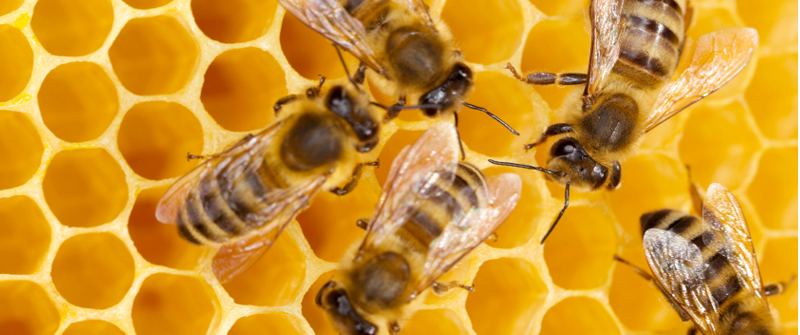
Top random bee facts you had no idea about

Despite their small size, bees are known as one of the most diligent and hard-working insects. And what else? Find out more facts here along with some funny images

Image result for bees
  • There are 3 kinds of bees in a hive: Queen, Worker and Drone.
  • Only the Queen in the hive lays eggs. She communicates with her hive with her own special scent called pheromones. The queen will lay around 1,500 eggs per day.
  • The worker bees are all female and they do all the work for the hive. Workers perform the following tasks inside the hive as a House Bee: Cleaning, feeding the baby bees, feeding and taking care of the queen, packing pollen and nectar into cells, capping cells, building and repairing honeycombs, fanning to cool the hive and guarding the hive.
  • Workers perform the following tasks outside the hive as Field Bees: Gathering nectar and pollen from flowers, collecting water and a sticky substance called propolis.
  • Not many people know the random facts that bees have 2 stomachs - one stomach for eating and the other special stomach is for storing nectar collected from flowers or water so that they can carry it back to their hive.
  • The male bees in the hive are called drones. Their job in the hive is to find a queen to mate with. Male bees fly out and meet in special drone congregation areas where they hope to meet a queen. Male drone bees don't have a stinger.
  • If a worker bee uses her stinger, she will die.
  • Bees are classified as insects and they have 6 legs.
  • Bees have 5 eyes - two compound eyes and three tiny ocelli eyes.
  • Bees go through four stages of development: Egg, Larvae, Pupae and Adult Bee.
  • The bees use their honeycomb cells to raise their babies in, and to store nectar, honey, pollen and water.
  • Nectar is a sweet watery substance that the bees gather. After they process the nectar in their stomach they regurgitate it into the honeycomb cells. Then they fan with their wings to remove excess moisture. The final result is honey.
  • Bees are the only insect in the world that make food that humans can eat.
  • Honey has natural preservatives and bacteria can't grow in it.
  • Honey was found in the tombs in Egypt and it was still edible! Bees have been here around 30 million years.
Let's with us discover some other animal facts, science facts to widen your knowledge

Where do mice live?

Get information about animal facts - here is mice facts by this article

Mice are probably the smallest member of the rodent order. Mice are funny and entertaining to observe. Mice are natures ‘busy-bodies’ and they scuttle around being very inquisitive. Mice make brilliant pets, they do not need much space and are very inexpensive to keep. A mouse will sit in your hand and generally explore its surroundings.


Where do mice live?

Mice are hardy creatures that are found in nearly every country and type of terrain. They can live in forests, grasslands and manmade structures easily. Mice typically make a burrow underground if they live out in the wild. Their burrow helps protect them from predators. Their natural predators are cats, birds, wild dogs and foxes.
Also see elephant facts

Mice are nocturnal, meaning they like to sleep during the day. This is why pet mice or house mice can be heard playing or foraging during the night. Most wild mice are timid toward humans and other animals, but they are very social with other mice. Domestic mice are very friendly toward humans and can make good pets for older children and adults.

According to the RSPCA, mice are very territorial. Even domestic mice like to have a large area that they can claim as their own.

What do mice eat?

Image result for Mice information

If you believe what you see in cartoons, you would think that mice eat cheese. Actually, they like to eat fruits, seeds and grains. They are omnivorous, which means they eat both plants and meat, and the common house mice will eat just about anything it can find. In fact, if food is scarce, mice will even eat each other.

Mice have voracious appetites. They eat around 15 to 20 times per day, so they build their homes nearby places that have readily accessible food sources.

Baby mice

When homes are infested with mice, humans will often find chewed up wires, books, papers and insulation around their home. Mice aren't eating these items, they are chewing them into pieces that they can use to make their nests. This is because mice nests are made from whatever the female mouse can find.

Also see penguin facts